Swimming Pool Resurfacing in Dubai (2026): Cost, Methods & Hotel Guide
16
Swimming pool resurfacing in Dubai is the difference between a pool that looks tired and one that looks newly built — without the cost of building one. Every pool surface wears out: plaster stains and roughens, tiles loosen, grout fails. In Dubai’s heat, UV, and heavy bather loads, that wear arrives faster than most owners expect. This 2026 guide covers the resurfacing methods available in Dubai, what each costs, how long the work takes, how hotels handle the downtime, and how to choose a contractor.
What Is Swimming Pool Resurfacing?
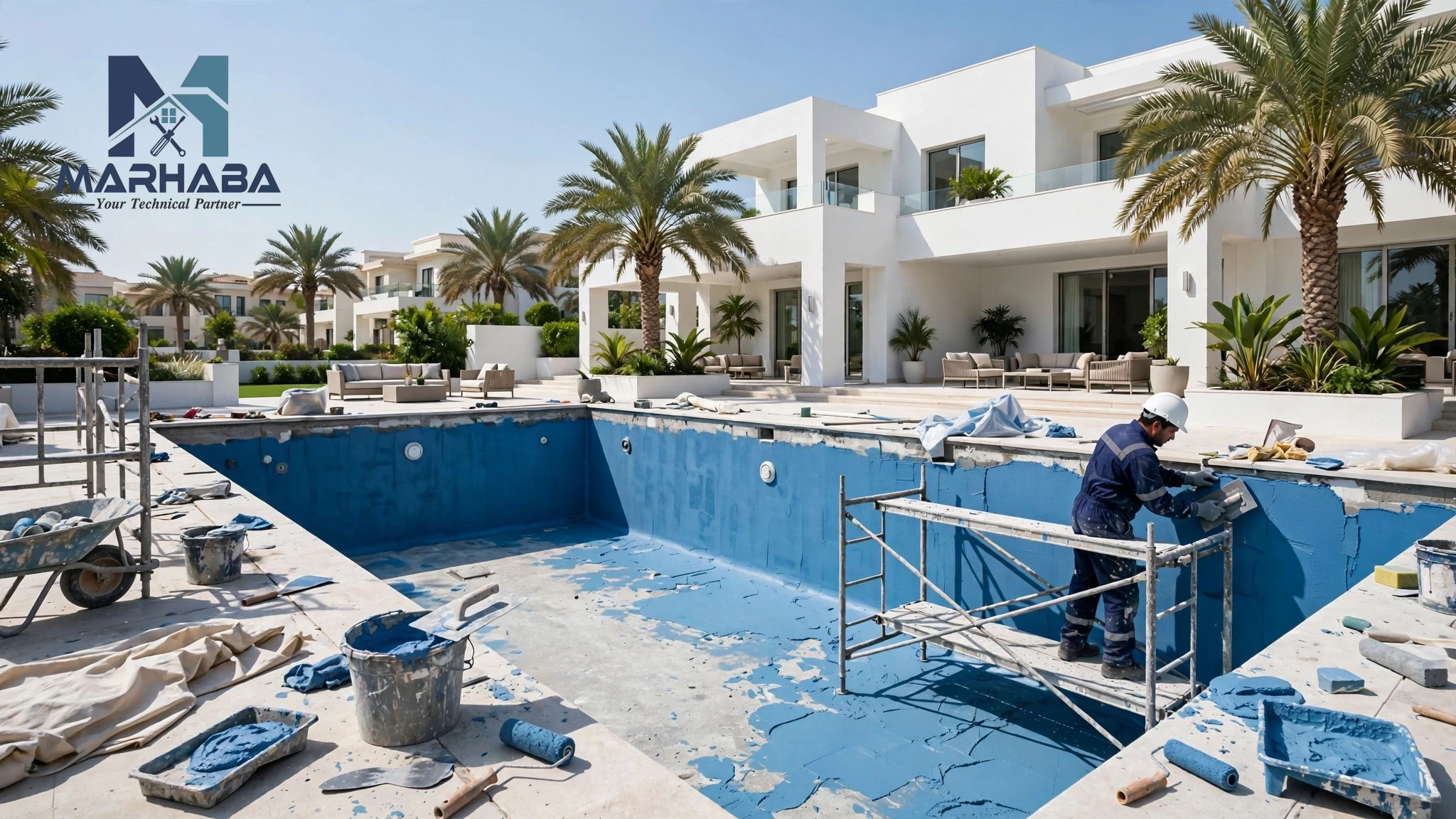
Resurfacing means stripping the worn interior finish of your pool — plaster, pebble, tile, or paint — repairing the shell underneath, and applying a brand-new finish. The structure, plumbing, and equipment stay; only the surface you see and swim against is renewed. It is the middle path between endless patch repairs and a full rebuild, and for most ageing pools it is the right one. If the shell itself is failing, read our pool renovation cost guide for Dubai to compare the full-renovation route.
7 Signs Your Pool Needs Resurfacing
- Staining that won’t brush off. Mineral and chemical stains that survive normal cleaning mean the surface is porous and breaking down.
- Rough texture underfoot. Plaster that feels like sandpaper is eroding. It irritates skin and harbours algae.
- Chipping, flaking, or delamination. Finish coming away in patches exposes the shell to water damage.
- Persistent algae. When algae keeps returning despite correct chemistry, it is living in the microscopic pits of a worn surface.
- Loose or hollow tiles and failing grout. In Dubai, re-grouting or partial re-tiling is commonly needed from around year six onward.
- Water loss with no plumbing leak. Surface cracks weep water constantly. Our pool leak detection guide explains how to confirm it.
- The pool just looks old. A faded, dated finish drags down the whole property — a real problem for hotels and towers selling on appearance.
Pool Resurfacing Methods Compared
Five finishes dominate the Dubai market. Each has a different price point, lifespan, and feel:
| Method | What it is | Typical lifespan | Best for |
|---|---|---|---|
| Plaster (marcite) | The classic smooth white or coloured cement finish | 7–10 years | Budget-conscious owners; the most affordable full resurface |
| Quartz plaster | Plaster blended with quartz aggregate for stain resistance and deeper colour | 10–15 years | Owners wanting plaster’s smoothness with better durability |
| Pebble / aggregate | Small smooth stones exposed in the finish; natural look | 15+ years | Longest life; hotels and villas that want to resurface once |
| Fiberglass coating | Sleek resin coating; resists algae and staining | 10–15 years | Pools plagued by algae; smooth non-porous surface |
| Tile (ceramic / porcelain / glass mosaic) | Full tile finish; premium look, easiest to clean | 20+ years with maintenance | Luxury villas and hotels; highest upfront cost |
Lifespans above are industry-standard ranges; Dubai’s UV intensity and year-round use sit at the demanding end of them. Traditional plaster generally needs attention first (7–10 years), while pebble finishes can exceed 15 years. For a deeper dive into how the materials differ, see this resurfacing vs replastering comparison.
Which finish suits Dubai’s climate?
Heat and UV punish pale plaster fastest — it chalks and stains first. Quartz and pebble finishes hold their colour far better under the Gulf sun, which is why they dominate hotel refurbishments here. Full tile costs the most but basically stops the resurfacing cycle: individual tiles can be replaced without redoing the whole shell. Match the finish to how long you plan to keep the property, not just to the quote in front of you.
Swimming Pool Resurfacing Cost in Dubai (2026)
No honest contractor prices a resurfacing job over the phone — the shell condition, surface area, and chosen finish move the number too much. What you can do is force every quote into the same shape. These are current Dubai market ranges for the finish materials, per square metre of pool surface:
| Finish | Typical Dubai range (AED / m²) |
|---|---|
| Ceramic tile finish | 180–280 |
| Porcelain tile finish | 280–450 |
| Glass mosaic finish | 600–1,400 |
| Plaster / quartz / pebble | Priced per project — get an itemised quote |
On top of the finish, budget for: surface preparation and shell repairs (crack repair, hollow-spot removal), waterline tile and coping (often done together — resurfacing frequently reveals coping that also needs attention), and refilling the pool (60–80 cubic metres for a standard villa pool). As a rule of thumb, a comprehensive renovation typically costs 30–60% of building an equivalent new pool — resurfacing alone sits well below that. Always get the preparation, finish, and refill priced as separate lines so quotes are comparable. Our pool maintenance cost guide covers what it costs to run the pool once it is restored.
How Long Does Pool Resurfacing Take?
For a standard residential pool, expect roughly 3–5 days from draining to finish application, followed by 7–10 days of careful water-chemistry balancing before the pool is ready for swimming. Larger pools, tile finishes, and shell repairs extend the timeline; straightforward plaster jobs can be quicker.
Planning downtime for hotels and commercial pools
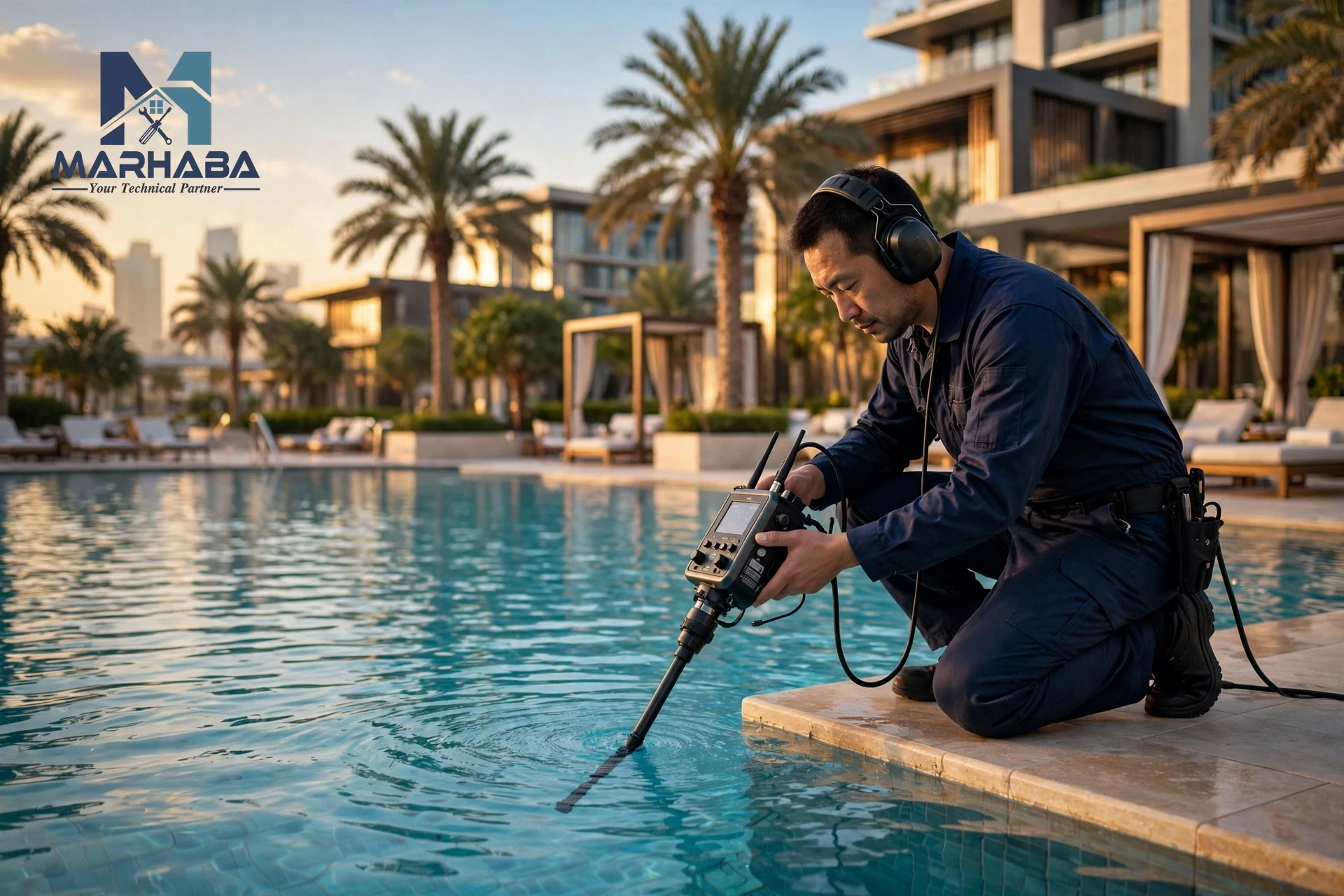
A hotel cannot simply close its pool for two weeks in season. Commercial resurfacing is scheduled in the cooler months or occupancy dips, sequenced so the pool reopens with chemistry already stable. Ask your contractor for a day-by-day programme with a contracted reopening date — and a penalty-free exit if the shell inspection reveals structural work that changes the scope. Some repairs (tile, waterproofing patches, part replacement) can even be done underwater by commercial divers without draining, which suits pools that cannot afford to close; full resurfacing, however, always needs the pool empty.
The Resurfacing Process, Step by Step
- Drain and inspect. The pool is drained and the shell inspected for cracks, hollow spots, and delamination. Structural issues are priced now, not mid-job.
- Prepare the surface. Old finish is removed or keyed (hydro-blasting or grinding), cracks are repaired, and the shell is made sound.
- Plumbing and fittings check. Skimmers, returns, lights, and main drains are inspected and replaced as needed while the pool is empty — the cheapest time to do it.
- Apply the new finish. Plaster, quartz, pebble, or tile goes on to specification, with curing time respected.
- Waterline tile and coping. Usually renewed together with the finish for a uniform result.
- Refill and balance. The pool is refilled and chemistry is balanced over 7–10 days. New surfaces temporarily affect pH and alkalinity, so testing is daily at this stage.
- Handover with documentation. For commercial pools: finish warranties, chemistry logs, and maintenance instructions for your records.
Resurfacing vs Full Renovation vs New Build
Choose resurfacing when the shell is sound and you want a new surface and a refreshed look. Choose full renovation when the pool also needs structural repair, new plumbing, equipment replacement, or a shape change — budget roughly 30–60% of a new build. Choose a new build when the shell is failing, the layout no longer works, or every mechanical system has died at once. A contractor who pushes you toward the most expensive option without a shell inspection has told you everything about how they quote. Compare with current hotel pool construction costs in the UAE before deciding.
Hotel & Commercial Pool Resurfacing in Dubai: What Changes
Everything is the same work with tighter constraints:
- Compliance. Older pools must be brought up to current Dubai Municipality standards during renovation — safety fencing, drainage, and equipment rules have all tightened. Factor approval time into the programme. See this summary of Dubai’s official pool guidelines.
- Documentation. Keep the finish specification, warranty, and chemistry logs — Municipality inspectors ask for records, and the next contractor needs the spec.
- Guest impact. Schedule noisy work (grinding, blasting) away from peak guest hours; communicate the reopening date to front-of-house early.
- Waterproofing. Commercial pools should have the waterproofing system assessed while the pool is empty — it is the cheapest moment to fix it. See our commercial pool waterproofing guide.
How to Choose a Pool Resurfacing Contractor in Dubai
- Trade licence covering pool works — not a generic cleaning licence. Ask to see it.
- Itemised quote — preparation, shell repairs, finish per m², coping/tile, refill, and balancing as separate lines.
- Finish samples and a written specification — brand and product name of the plaster/quartz/pebble/tile, not just “pebble finish”.
- Two site addresses over five years old — visit a pool they resurfaced years ago; coping joints and tile edges tell the truth.
- Written curing and balancing programme — who tests the water daily after refill, and for how long.
- Warranty in writing — what is covered (delamination, staining, tile failure) and for how long.
- A builder’s mindset — prefer a contractor that also builds pools; the crew resurfacing your shell should understand the structure beneath it. Our swimming pool services cover resurfacing alongside construction and maintenance.
Caring for Your Pool After Resurfacing
The first month decides how long the finish lasts. Test pH and alkalinity daily for the first 7–10 days — new plaster and quartz push chemistry around. Brush the entire surface daily for the first two weeks to prevent plaster dust settling. Run the filter longer than usual during the curing period, keep chlorine at the lower end of the range until pH stabilises, and do not use automatic cleaners on a fresh finish until the contractor clears it. After that, normal weekly maintenance keeps the new surface at its best for its full lifespan.
Frequently Asked Questions
How much does swimming pool resurfacing cost in Dubai?
It depends on pool size, shell condition, and finish. As a frame: ceramic tile finishes run AED 180–280 per m², porcelain AED 280–450 per m², and glass mosaic AED 600–1,400 per m² in Dubai; plaster, quartz, and pebble are priced per project. Always get preparation, finish, coping, and refill as separate line items — no honest contractor prices resurfacing over the phone.
How long does pool resurfacing take?
A standard residential pool takes about 3–5 days from draining to finish application, plus 7–10 days of water-chemistry balancing before swimming. Tile finishes, shell repairs, and larger commercial pools take longer.
How often should a pool be resurfaced in Dubai?
Traditional plaster lasts roughly 7–10 years; quartz 10–15 years; pebble 15+ years; full tile 20+ years with maintenance. Dubai’s UV and year-round use sit at the demanding end of these ranges. Plan re-grouting or partial re-tiling from around year six.
What is the best pool resurfacing material for Dubai’s climate?
Quartz and pebble finishes handle the Gulf sun best — they hold colour and resist staining far longer than plain plaster. Full tile is the premium, longest-lasting option. Match the finish to how long you will keep the property.
Can a pool be resurfaced without draining it?
Full resurfacing always needs the pool empty. But many smaller jobs — tile replacement, waterproofing patches, part replacement — can be done underwater by commercial divers, which suits hotel pools that cannot afford to close.
Is it better to resurface or rebuild a pool?
Resurface when the shell is sound. Renovate (30–60% of new-build cost) when structure, plumbing, or equipment also needs work. Rebuild only when the shell is failing or the layout no longer works.
What is the difference between replastering and resurfacing?
Replastering applies a new plaster coat — the most affordable refresh, lasting 7–10 years. Resurfacing is the broader term covering all new finishes: plaster, quartz, pebble, fiberglass, or tile, each with different cost and lifespan.
Does resurfacing fix pool leaks?
It fixes leaks caused by surface cracks and failed finish. It does not fix plumbing leaks or structural shell failure — those need detection and repair first. Get a leak survey before committing to a finish.
When is the best time of year to resurface a pool in Dubai?
The cooler months (November–March): shorter curing stress, lower occupancy for hotels, and the pool reopens before summer demand peaks.
Will resurfacing increase my property value?
A newly finished pool materially improves first impressions for villas on the market and guest satisfaction scores for hotels. It rarely adds dirham-for-dirham value, but a visibly ageing pool actively subtracts it.
Do I need approval to resurface a pool in Dubai?
Like-for-like resurfacing generally does not need fresh authority approval, but any structural change, equipment change, or change of use does — and older pools must meet current Municipality safety standards. Your contractor should confirm this in writing before work starts.
How do I maintain a newly resurfaced pool?
Daily pH/alkalinity testing for the first 7–10 days, daily brushing for two weeks, longer filter runs during curing, and no automatic cleaners until the contractor clears it. Then resume normal weekly maintenance.
Planning a resurface? Marhaba Technical resurfaces villa, hotel, and commercial pools across Dubai — shell assessment, itemised quotes, and finishes specified for the Gulf climate. Message us on WhatsApp at +971 58 157 7207 for a site assessment.